
A state funeral in Hong Kong honors Tung Chee-hwa, the city's first post-colonial leader
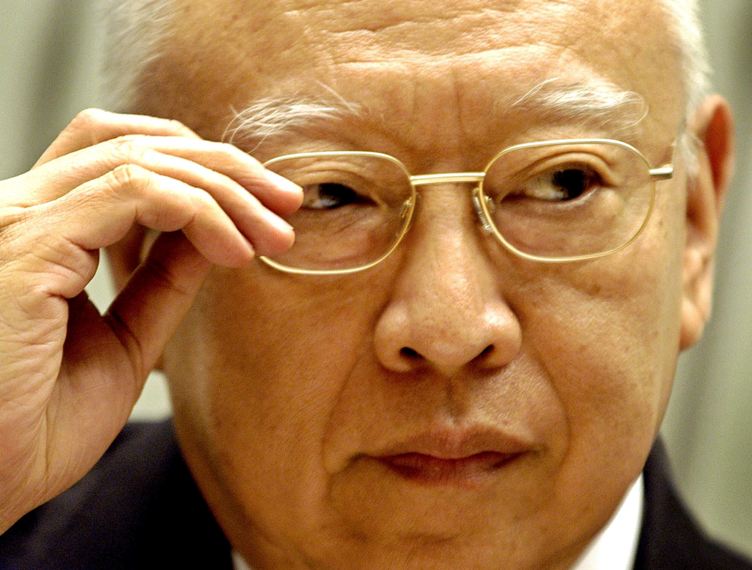
HONG KONG, Sep 20 : A state funeral was held Sunday for Hong Kong's first post-colonial leader, Tung Chee-hwa, who led the city through the initial years of its transition from British rule after it was returned to China in 1997.
Chinese officials and Hong Kong political leaders attended the service, only the third state funeral in the former British colony since the 1997 handover.
Tung, a shipping magnate who was the city's chief executive from 1997 to 2005, died Sept. 8 at the age of 89. He grappled with the Asian financial crisis, SARS epidemic and public protests during his nearly eight years in office.
Flower wreaths lined the wall outside the Hong Kong Funeral Home and Tung's casket, draped in a Chinese flag, could be seen being brought out after the service in live video streamed online by Hong Kong media. The media were not allowed inside.
Shi Taifeng, a member of the Politburo of China's ruling Communist Party, and Xia Baolong, the director of China's Hong Kong and Macao Affairs Office, left the funeral in a white minibus with Hong Kong's current leader, John Lee.
About 200 people were invited to the service, an attendee told Hong Kong’s South China Morning Post newspaper. Others paid condolences at three venues set up around the city.
After his death, the Chinese government described Tung as a close friend of the Communist Party and an outstanding contributor to the one-country, two systems framework that governs Hong Kong and nearby Macao, a former Portuguese colony returned to China in 1999.
Not long after Tung took office in 1997, Hong Kong’s economy was battered by a financial crisis that swept across Asia. In 2003, SARS (severe acute respiratory syndrome) killed nearly 300 people in the city and dealt another blow to the economy.
The same year, an estimated half-million people took to the streets to protest the government’s plan to enact an anti-treason law that was seen as a threat to civil liberties. The government shelved the plan, and Tung resigned in 2005, citing health reasons.
The 2003 protest marked the start of years of pro-democracy protests that came to a head in 2019 and were followed by a crackdown and a Beijing-imposed national security law in 2020.
After stepping down, Tung was elected vice chairman of the Chinese People's Political Consultative Conference, the country’s top political advisory body. He was among 42 people who received national medals and honors in 2019 for their contributions to the country.


